Vegan Diet Eases Arthritis Pain, Finds New Study
Published 20 April 2022
A new study suggests that a low-fat vegan diet, without calorie restrictions, improves joint pain in patients with rheumatoid arthritis.
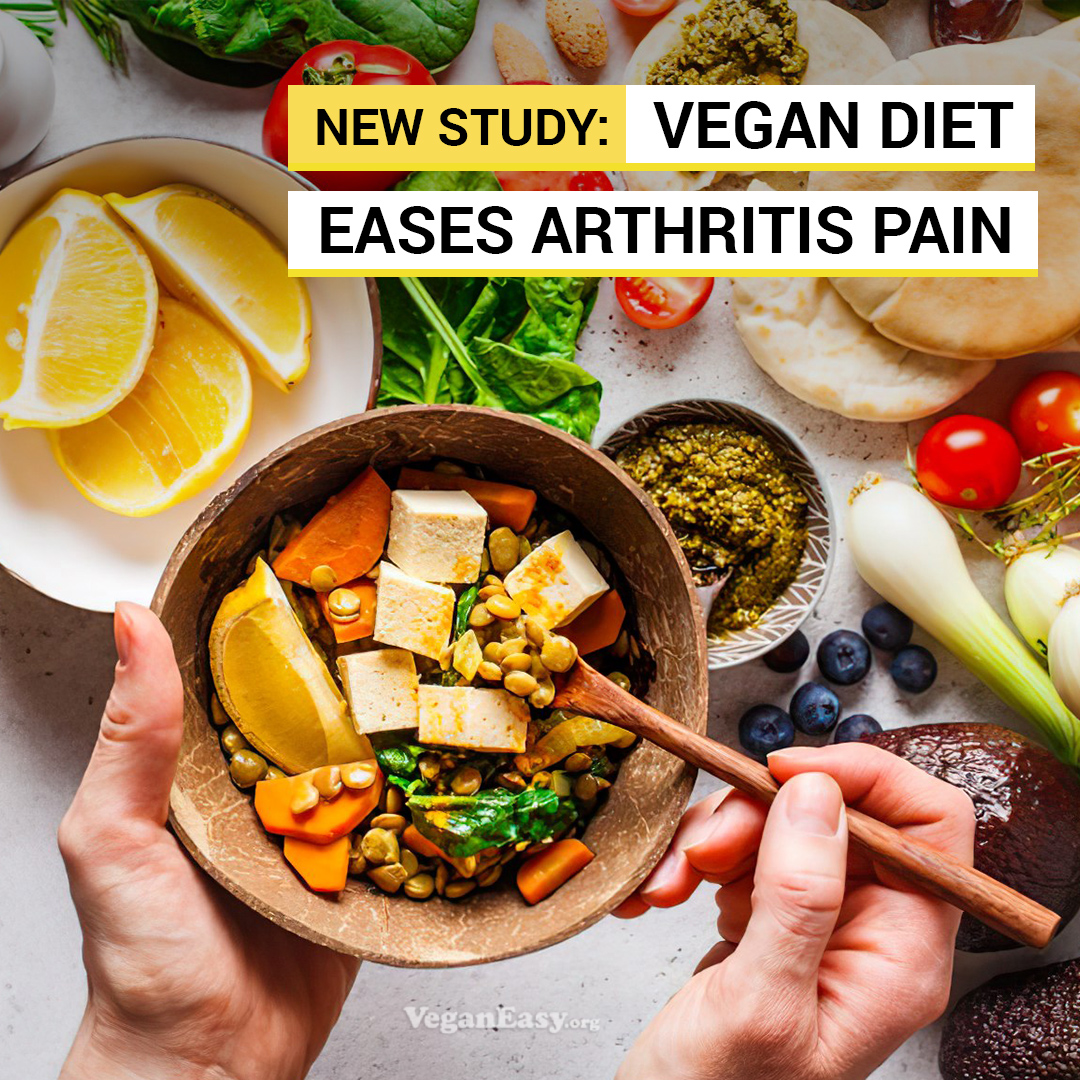
WASHINGTON, D.C.—A low-fat vegan diet, without calorie restrictions, improves joint pain in patients with rheumatoid arthritis, according to a new study conducted by researchers at the Physicians Committee for Responsible Medicine and published in the American Journal of Lifestyle Medicine. Study participants also experienced weight loss and improved cholesterol levels.
“A plant-based diet could be the prescription to alleviate joint pain for millions of people suffering from rheumatoid arthritis,” says Neal Barnard, MD, lead author of the study and president of the Physicians Committee. “And all of the side effects, including weight loss and lower cholesterol, are only beneficial.”
Rheumatoid arthritis is a common autoimmune disease that typically causes joint pain, swelling, and eventually permanent joint damage.
At the outset of the Physicians Committee’s study, participants were asked to use a visual analog scale (VAS) to rate the severity of their worst joint pain in the preceding two weeks, from “no pain” to “pain as bad as it could possibly be.” Each participant’s Disease Activity Score-28 (DAS28) was also calculated based on tender joints, swollen joints, and C-reactive protein values, which indicate inflammation in the body. DAS28 increases with rheumatoid arthritis severity.
During the study, 44 adults previously diagnosed with rheumatoid arthritis were assigned to one of two groups for 16 weeks. The first group followed a vegan diet for four weeks, with the elimination of additional foods for three weeks, then reintroduction of the eliminated foods individually over nine weeks. No meals were provided, and participants handled their own food preparation and purchases, with guidance from the research team. The second group followed an unrestricted diet but were asked to take a daily placebo capsule, which had no effect in the study. Then the groups switched diets for 16 weeks.
During the vegan phase of the study, DAS28 decreased 2 points on average, indicating a greater reduction in joint pain, compared to a decrease of 0.3 points in the placebo phase. The average number of swollen joints decreased from 7.0 to 3.3 in the vegan phase, while that number actually increased from 4.7 to 5 in the placebo phase. For those who completed the study, VAS ratings also improved significantly in the vegan phase, compared with the placebo phase.
The vegan diet also led to greater decreases in DAS28 in a subanalysis that excluded individuals who increased medications during the study and another subanalysis limited to participants making no medication changes.
In addition to reductions in pain and swelling, body weight decreased by about 14 pounds on average on the vegan diet, compared with a gain of about 2 pounds on the placebo diet. There were also greater reductions in total, LDL, and HDL cholesterol during the vegan phase.
Vegan Diet Healed Jane’s Rheumatoid Arthritis Symptoms
In the video, Jane discusses how her rheumatoid arthritis symptoms went away after taking part in a Physicians Committee study that found a low-fat vegan diet, without calorie restrictions, improves joint pain in patients with rheumatoid arthritis. Study participants also experienced weight loss and improved cholesterol levels.
Original Article > the Physicians Committee for Responsible Medicine
Recent News
-

Vegan YouTube Channels – Our Top Picks
Vegan Easy’s YouTube channel recommendations to help you on your vegan journey.
-

Pamela Anderson’s New Vegan Cookbook: A Culinary Journey of Love and Compassion
Pamela Anderson, the iconic Hollywood actress and passionate animal rights advocate, is set to captivate the culinary world with her upcoming vegan cookbook titled "I Love You: Recipes from the Heart."
-
January 2024 Vegan Easy Challenge Recap
People from around the world began their 2024 with a peaceful start by taking the 30-day Vegan Easy Challenge.
-
Discover the Culinary Delights of Byron Bay’s Newest Plant-Based Cooking School
Learn the sublime art of plant-based cuisine at Katie White's new cooking school in Byron Bay
-

Beyond Romance: Encouraging Vegan Themes and Animal Protection in the Growing World of K-Dramas
The global popularity of K-dramas and growing interest in veganism present a unique opportunity to foster positive change
-

Cultivating Change with Farm Transitions Australia
Helping farmers find the right path for them, for a sustainable and viable future.
Leave a Comment