 Micronutrient mini-series
This article series is a spotlight on the micronutrients, vitamins and minerals you need on a vegan diet. We look at where you can get them, how much you need, if supplementing is necessary, and tips for incorporating them into your plant-based diet.
 Article by Caitlin Adler, a vegan Accredited Sports Nutritionist, Strength & Conditioning coach and bodybuilder at Plant Forged Physique. Her passion is helping vegans achieve their health and fitness goals with evidence-based guidance and expertise. Check out their free Vegan Supplement Cheat Sheet and other resources.
Iron is a mineral required for proper growth and development. Your body uses iron to make haemoglobin, a protein in red blood cells that carries oxygen around your body, and myoglobin, a protein that provides oxygen to muscles.
Low iron consumption can lead to iron deficiency or anaemia. This reduces the amount of healthy red blood cells and haemoglobin needed to carry enough oxygen to your body’s cells.
Symptoms of low iron and anaemia include:
- fatigue
- weakness
- dizziness
- headaches
- and being short of breath.
As an athlete or gym-goer, it also reduces your capacity to exercise.
How much?
There are two types of iron found in food: heme (animal-derived) and non-heme (plant-derived) iron.
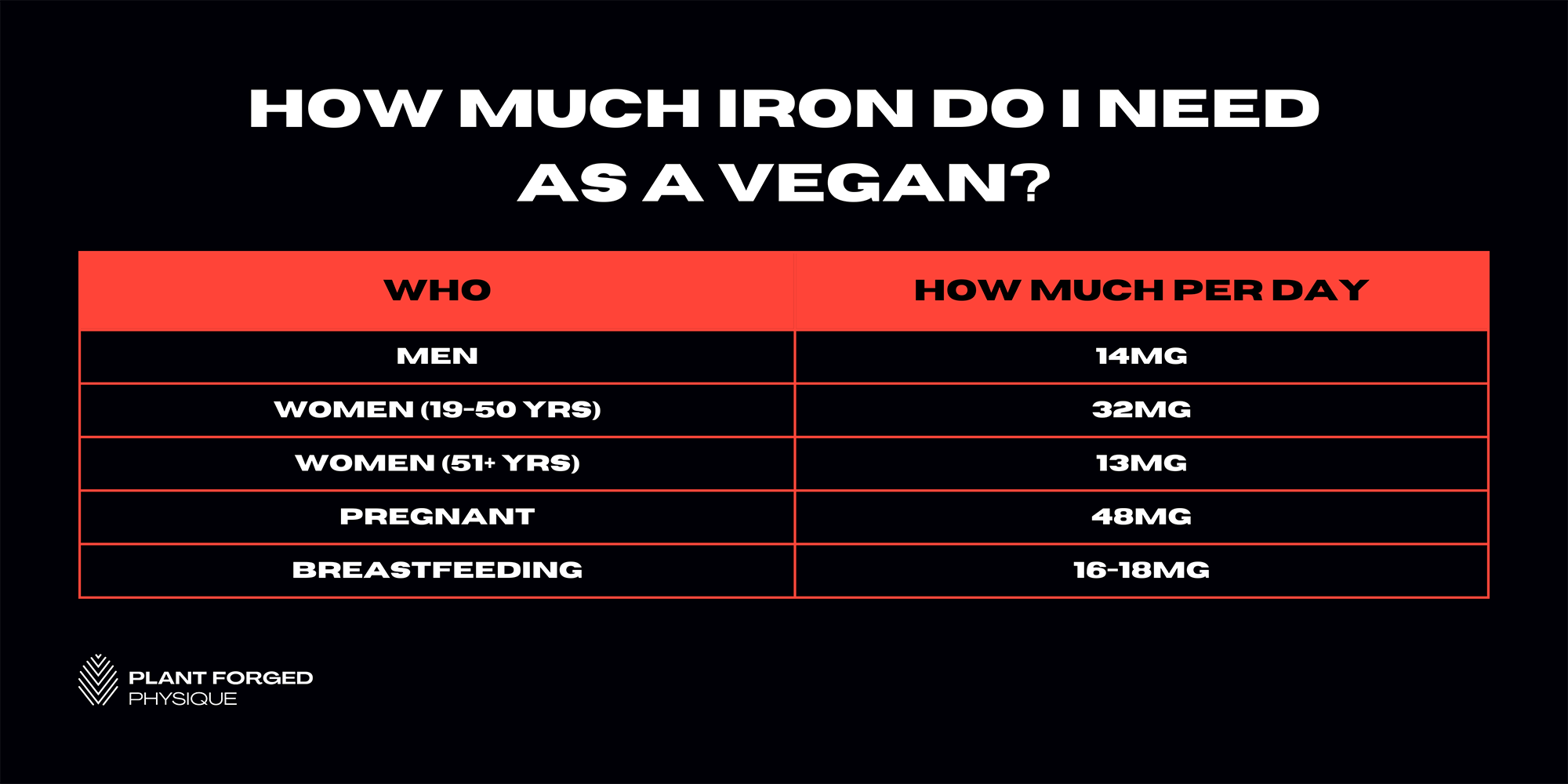
Vegan diets can contain plenty of iron but because the molecular form of non-heme iron is less bioavailable, it’s harder for us to absorb. So vegans and vegetarians are more likely to have low iron. This is why the recommended iron intake on a plant-based diet is 1.8x higher than those who eat meat.
Where from?
There are a lot of plant foods that contain iron. But not all would be considered a ‘good’ source.
For example, 1 cup of broccoli contains about 1mg of iron. But you’d need a lot of broccoli to reach 32mg per day.
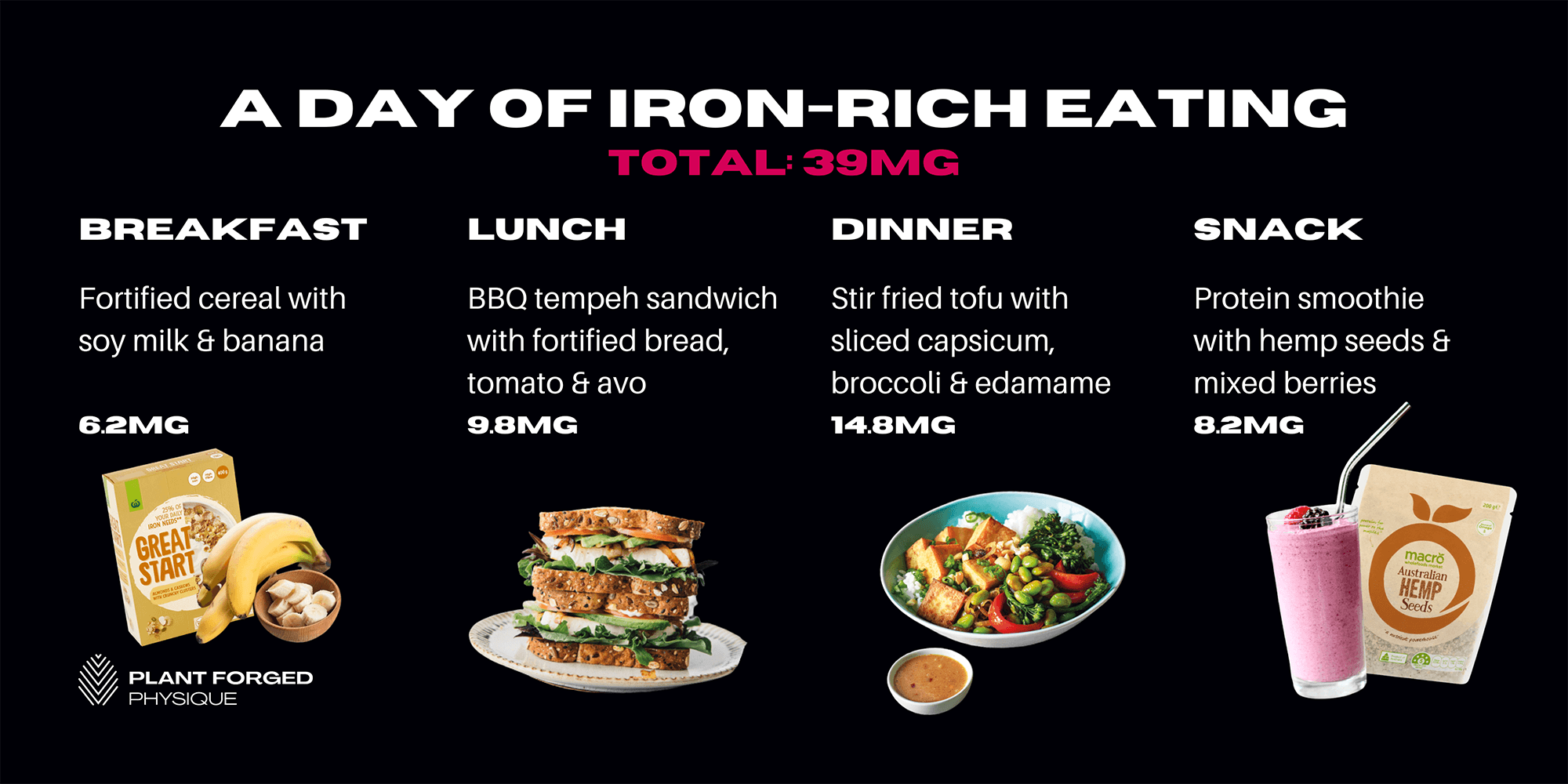
A good source of iron contains 3-5mg per standard serve, while a great source of iron would be 5mg or more. For example:
- 150g tofu / 7-9mg
- 200g tempeh / 5-6mg
- 250g of edamame / 5mg
- 60-80g of fortified cereal
- 3 slices fortified bread / 5-7mg
- 30-40g fortified protein powder / 5-12mg
Adding in iron-dense foods throughout your meals each day can make meeting your recommended intake a lot easier.
Supplementing
But the reality is, you may not eat meals high in iron every day. So an iron supplement can be a useful and sometimes necessary tool to ensure adequate intake.
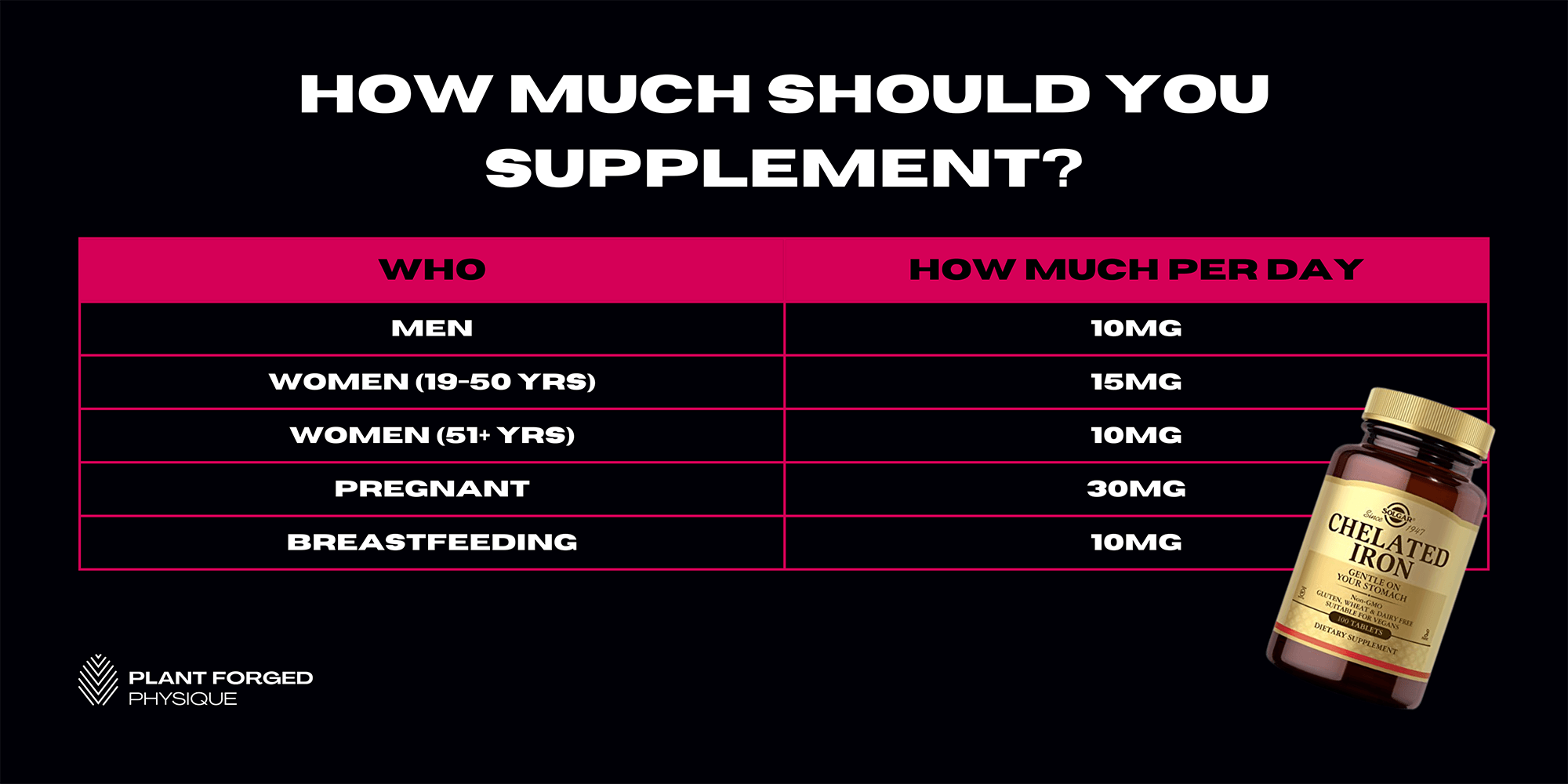
Iron supplements are usually made of iron fumarate or iron sulfate – which are both absorbed equally well. Iron is most easily absorbed when chelated to amino acids, so it can be helpful to look for “chelated iron” when purchasing a supplement.
Iron supplements are safe to consume but can be tough on digestion. So it’s not uncommon to experience effects such as dark stools, stomach discomfort, and constipation.
These can be controlled by supplementing in smaller amounts such as using 3 doses of 5mg per day instead of 1 dose of 15mg, and not taking iron supplements on an empty stomach.
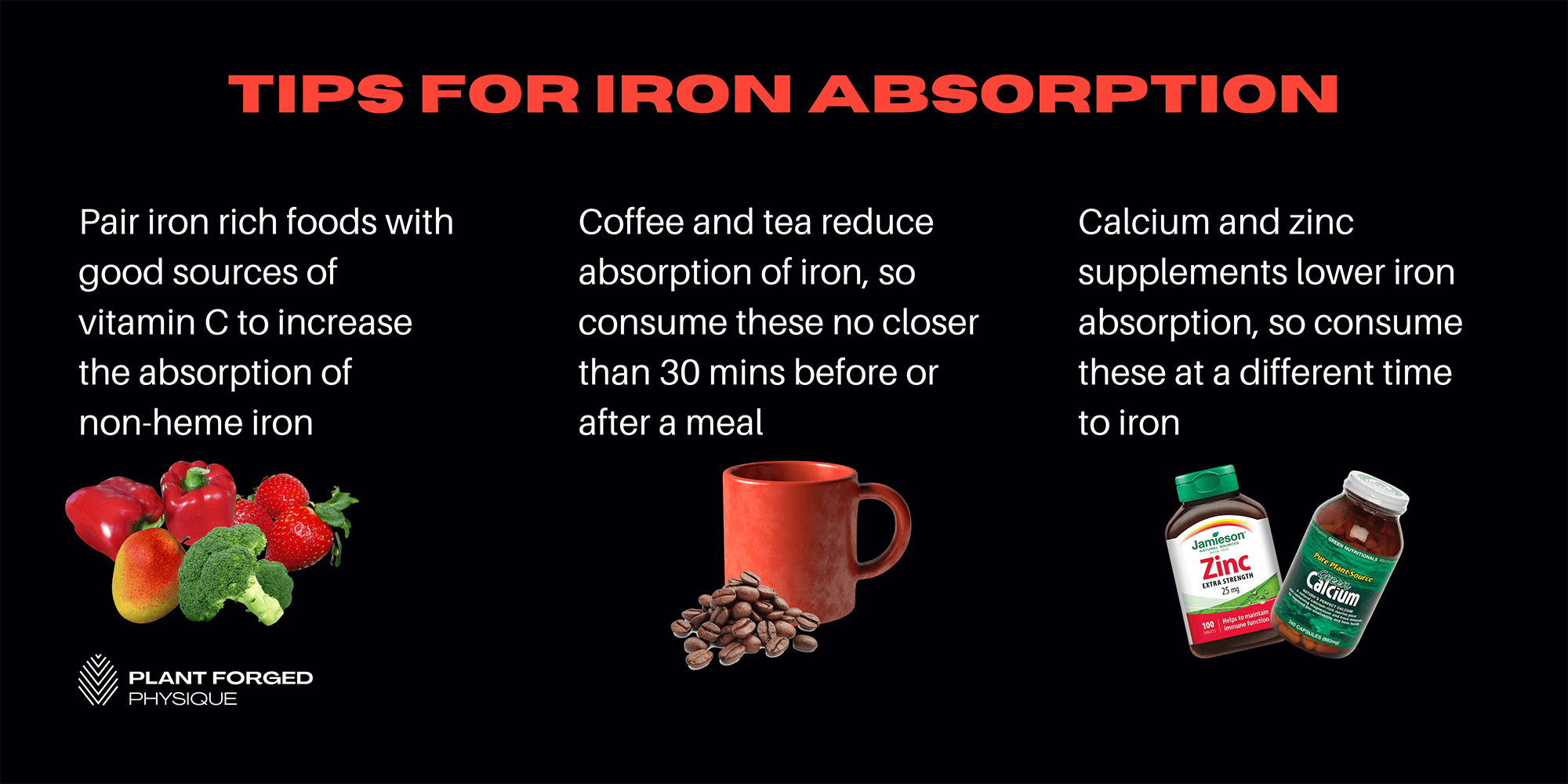
Key takeaways
Iron is abundant in a vegan diet – you just need to be a bit conscious about which sources you pick. Making sure you are selecting foods each day that are rich in iron, and when in doubt include a supplement to help ensure you’re thriving on a vegan diet.
Summary
- Meeting your iron needs is vital to thriving on a vegan diet
- Plant-based iron is harder to absorb, so vegans require 1.8x more
- Lots of vegan foods contain iron, but focus on including foods in each meal that have at least 3mg of iron per serve
- Supplementationing is a useful tool to help guarantee you’re meeting your iron intake
FREE VEGAN SUPPLEMENT CHEAT SHEET
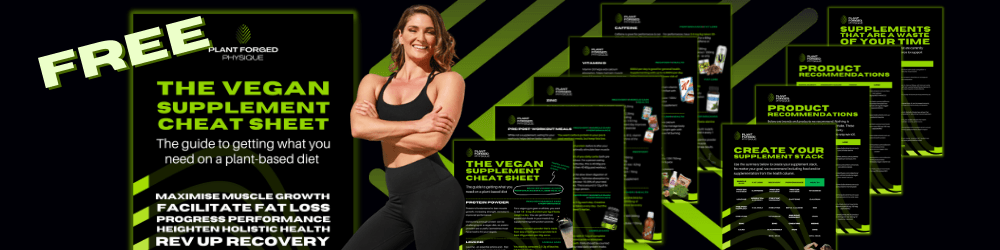
Want to learn more about supplementing as a vegan?
Download the Free Vegan Supplement Cheat Sheet from Plant Forged Physique.
This handy evidence-based guide outlines exactly what supplements are needed to improve muscle gain, health, performance, recovery, and fat loss – and which ones are a waste of your time and money!